Join thousands of others and discover Kansas City's captivating history every week with the exclusive newsletter from KC Yesterday. Sign up now to unlock fascinating stories about the mafia, architecture, prohibition, sports, and everything in between!
The Story of a Failed Downtown Stadium Proposal
The Story of a Failed Downtown Stadium ProposalIf you were forwarded this email, click here to subscribe (it's free!) Read this story online | Sponsor this newsletter | Shop 📸
In the latter half of the 1960s, Kansas City found itself at a crossroads of ambition and practicality, as civic leaders and sports enthusiasts dreamt of a downtown baseball stadium that would redefine the city's landscape. The dynamics of football were shifting dramatically in the early 1960s, with the AFL marking its territory by kicking off their first official game on September 9, 1960, setting in motion a series of events that would ultimately lead to the merger with the NFL in 1966, consummated after the 1969 season. The Kansas City Chiefs, who began as the Dallas Texans, relocated to Kansas City after a pivotal meeting with Mayor H. Roe "Chief" Bartle in 1962.
The Chiefs' new home, the aging Municipal Stadium, was nestled southeast of downtown Kansas City. Despite its charm, the stadium was inadequate by contemporary standards, with a seating capacity that fell short of the NFL's requirements and lacking in essential amenities. It was a structure from a bygone era, surrounded by the quaintness of residential life rather than the bustle of urban commerce and convenience. Amidst this backdrop, the vision of a grand "civic sports and recreation" project was proposed by Byron Spencer in January 1963. This ambitious $10 million proposal intended to house baseball, football, and various other sports while also providing recreational facilities for the community. The project suggested a future where Kansas City's sports infrastructure would be accessible, modern, and capable of hosting large-scale events.
The wheels of progress began to turn in early 1965 when the Jackson County Sports Complex Steering Committee was established, later solidified by the creation of the Jackson County Sports Authority. This group was charged with a singular mission: to erect a sports complex befitting the aspirations of Kansas City. An extensive analysis was conducted, exploring over 15 potential sites, with two contenders emerging. The downtown site promised to be a beacon of urban revitalization, a stone's throw from the heart of the city. However, its challenges were daunting—costly land acquisitions, traffic snarls, and the logistical nightmares of situating a modern stadium in the dense fabric of the city. Furthermore, the downtown site faced a variety of headwinds from potential community disruption, historical preservation concerns, and political opposition.
The alternative was the Leeds Road site (modern day Truman Sports Complex), a more pastoral setting on the outskirts, where the promise of open space and easier access via major highways appealed to the pragmatist. Here, the vision of a sports complex could unfold across a vast canvas, with ample room for parking, infrastructure, and future development. As the Sports Authority weighed its options, the Greater Kansas City Sports Commission emerged, a collective of civic leaders aimed at drumming up support for the new complex. Their efforts were a testament to the city's commitment to its sports franchises and the shared dream of a new home for them.
However, as reports and renderings of the proposed sites surfaced, reality began to set in. The downtown site, while alluring in its proximity to the city's pulse, was fraught with innumerable challenges, ultimately leading to its demise. In the end, practical considerations prevailed. Jackson County officials endorsed the Leeds Road site. The dream of a downtown stadium was relinquished in favor of a more achievable, albeit less central, vision. Today, over half a century after Truman Sports Complex opened, Kansas City finds itself grappling with the question of a downtown stadium again. Do you support a downtown KC baseball stadium? Why or why not? Reply and let me know! Designing the Sports Architecture Capital of the WorldInterested in learning more about KC's sports architecture history? Check out this great podcast with Frank Boal and Tom Waggoner! This Week's Featured Home1217 W 58th St, Kansas City, MO 64113
The Weekly Featured Home is in partnership with KC Daily - the best news in Kansas City every weekday morning, for free.
|


Stories from the City - History of Kansas City
Join thousands of others and discover Kansas City's captivating history every week with the exclusive newsletter from KC Yesterday. Sign up now to unlock fascinating stories about the mafia, architecture, prohibition, sports, and everything in between!

The Story of The Hyatt Regency Walkway Collapse If you were forwarded this email, click here to subscribe (it's free!) Read this story online | Sponsor this newsletter | Shop 📸 On July 17, 1981, a catastrophic structural failure occurred at the Hyatt Regency Hotel. Two suspended walkways inside the hotel’s atrium collapsed during a crowded evening event, resulting in the deaths of 114 people and injuries to 216 others. It remains one of the deadliest structural failures in U.S. history....
The Story of the Great Flood of 1951 If you were forwarded this email, click here to subscribe (it's free!) Read this story online | Sponsor this newsletter | Shop 📸 Courtesy: Missouri Valley Special Collections, Kansas City Public Library, Kansas City, MO In mid-July 1951, Kansas City and its surrounding regions experienced one of the most devastating floods in their history, triggered by heavy rainfall that significantly raised water levels in the Kansas, Missouri, and other nearby rivers....
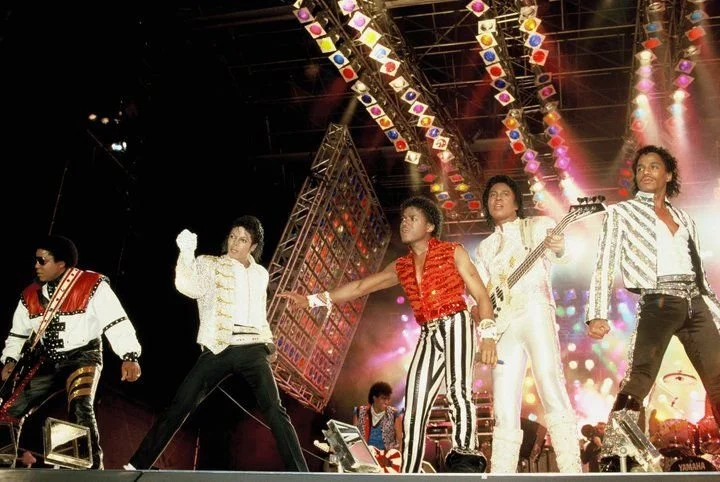
The Story of The Jacksons at Arrowhead Stadium (1984) If you were forwarded this email, click here to subscribe (it's free!) Read this story online | Sponsor this newsletter | Shop 📸 July 6-8, 1984: The Jacksons at Arrowhead Stadium In the summer of 1984, The Jacksons launched their North American Victory Tour with three sold-out shows at Arrowhead Stadium. In a rare move, Arrowhead officials accepted a flat $100,000 fee instead of their usual cut of ticket and concession sales. The Victory...